Mpumalanga Province Mining Communities
 Talking Points for the Meeting with the Department of Mineral Resources and Petroleum (DMRP) and the Presidency
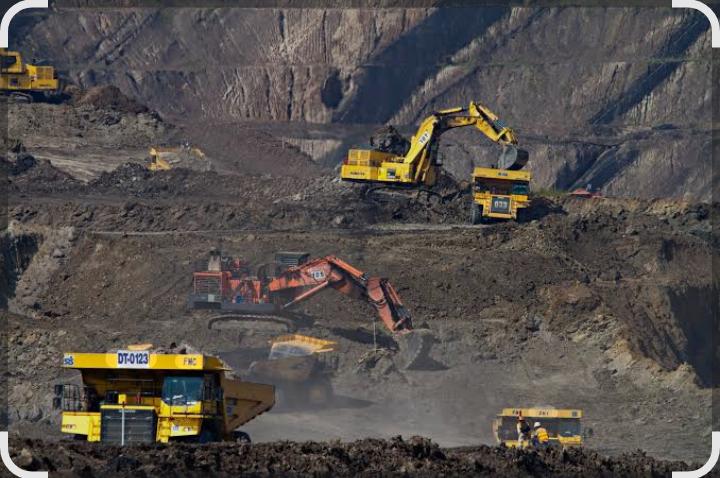
Key issues raised by Mpumalanga mining communities to the Department of Mineral Resources and Petroleum, and the Presidency centred on environmental destruction, lack of meaningful economic benefits, poor service delivery, and inadequate rehabilitation of mines. Further to the above is the frequent demand for better enforcement of Social and Labour Plans (SLPs) and the right to Free, Prior, and Informed Consent (FPIC) before mining operations begin.
Key issues to be raised include:
1. Environmental Degradation and Health Hazards
Water Contamination and Scarcity: Large mining operations in our area are responsible for polluting local water sources and using vast amounts of water, causing shortages in water-stressed areas. This is through using water streams and rivers around our area to beneficiate coal without being responsible to purify contaminated waters.
Air Pollution and Structural Damage: As community members we are experiencing high dust levels impacting health, alongside damage to housing (cracking) due to blasting. These has been reported to the DMRP to no success because of the back dealings with the DMRP officials of Mine Health and safety with the mining houses in our area.
Failed Rehabilitation: Our communities face long-term health and environmental risks from improperly closed or abandoned mines, which often leave behind toxic water and dangerous waste. Underground coal mine fires are dangerous, often spontaneous, long-lasting blazes ignited by coal reacting with oxygen. These fires burn for decades or even centuries, emitting toxic gases, creating sinkholes, and threatening infrastructure. The point in case the Scoongesigt coal mine next to Vosman which has left untold environmental magnitude for the local community. This section of the old mine has left underground coal pillars that continues to burn even today as we speak to you now.
2. Socio-Economic Issues and Land Rights
Minimal Local Benefit: Despite SLPs, as communities we are experiencing little benefit in terms of local employment, with many jobs filled by outsiders. This has little to do with lack of skills in our area but more to do with the influx of people who come from outside the area and are allocated large the artisan mining opportunities by the Mineral Regulation section of the DMRP Mpumalanga Office.
Systemic Dispossession: Mining companies often secure land without adequate compensation for lost agricultural land or grazing areas, which are vital for local livelihoods. Many communities around Kriel, Ogies and Mgibe Tribal Authority has been experiencing this systematic economic exclusion by the mining houses and the Mineral Regulation section of the DMRP Mpumalanga Office.
Inadequate Consultation: As local communities we are tired of the “malicious compliance system” perpetuated by the Environmental Consultants who represent applicants for prospecting rights or even for mining permits and the they connive with the Environment Section of the Mineral Regulation section of the DMRP Mpumalanga Office and pass environmental authorisation against the interest of both the communities and the local environment. We demand for a "meaningful consultation" which is often missing, with engagement treated as a one-off meeting rather than an ongoing process.
3. Safety and Infrastructure
Failed Municipal Infrastructure: As Emalahleni communities we often put pressure on mining companies to fill the gap left by underperforming local governments, particularly regarding sanitation, road maintenance, and water supply. However, our success rate in this regard is very minimum as the mining houses turns to connive with our local authorities and thus evading transparency and accountability on their interventions.
Relocation Grievances: Forced relocation for mining projects often results in loss of land, livelihoods, and graves, without fair and equivalent compensation. This is extreme particularly for the black farming communities of Kriel and Ogies.
4. Illegal Mining and Security
Syndicate Activity: We have been experiencing Illegal mining in our area is mostly aided by the officials from Mineral Regulation section of the DMRP Mpumalanga Office and the our local and national police. This is a major economic threat that brings dangerous, unregulated actors into existing or abandoned mines, often leading to increased local violence.
Lack of Recognition for Artisanal Miners: As the representative of various communities, local entrepreneurs and local business people we demand a clear, legal pathway for small-scale, artisanal miners, as we are currently excluded from accessing land by current mining laws. We are required by the officials from Mineral Regulation section of the DMRP Mpumalanga Office to pay bribes to be allocated mining permits and full mining rights on regular basis.
5. Future of Work and Sustainability
Just Transition Worries: As the representative of various communities, local entrepreneurs and local business people we are worried about coal mines face potential closure, we are of the opinion that the transition to green energy includes local economic diversification and reskilling, rather than just abandonment. From the national team that coordinates these issues we are yet to properly engaged and not only “malicious consultation” which aimed at ticking the box. We demand for a "meaningful consultation" which is often missing, with engagement treated as a one-off meeting rather than an ongoing process.
Outsourcing Core Business: As the representative of various communities, local entrepreneurs and local business people we are worried about the replacement of permanent jobs with subcontracted, lower-paid work by mining sub-contracting companies seeking to cut costs. We are against any form of poverty wages and the DMRP as the regulator is not playing its part well in this regard.
As this committee it is our strong believe that local communities bear the brunt of negative mining impacts while wealth is exported elsewhere, creating an urgent need for better corporate accountability and regulatory oversight
.THE MISSING COMMUNITY OWNERSHIP AS PER THE MINING CHARTER III OF 2018
Community ownership in the South African mining sector has evolved from a voluntary initiative to a regulatory requirement, primarily driven by the Mining Charter III (2018), which mandates that new mining rights holders provide a 5% non-transferable carried interest to host communities. While intended to create equitable wealth, these ownership structures—often managed through Community Trusts which in our case is not existing and if existing, it does so out the community knowledge. We are aware of the perennial significant challenges regarding governance, transparency, and delivering tangible financial benefits to communities through these vehicles and we are committed for a transparent and good corporate governance principles for such community-development vehicle.
Core Community Ownership Structures
Community Share Ownership Trusts (CSOTs): This is the most common model where a trust holds shares in a mining company on behalf of local communities. Dividends are intended to be used for community development projects.
Carried Interest (Mining Charter III): The 2018 Charter mandates a 5% "carried interest" (equity equivalent) for host communities at no cost to them.
Employee Share Ownership Plans (ESOPs): While distinct, these are often lumped into the broad-based empowerment category and benefit mine workers rather than the surrounding community at large. We are not sure of how many mining houses have adhered to this requirement since many of our brothers and sisters whom we share common family spaces have any knowledge to this regard.
Key Patterns and Trends
Transformation Progress: The mining industry has achieved significant HDSA (Historically Disadvantaged South Africans) ownership. As of 2019/2020, studies indicated that community ownership and worker ESOPs made up roughly 10-15% of the total BEE ownership share. But in our case the trickling-down economic effect we are yet to see and feel it.
Shift to Local Focus: The focus has shifted from national "broad-based" schemes to specific "host communities"—the local communities geographically closest to mining operations. But in our case the trickling-down economic effect we are yet to see and feel it.
"Use it or Lose it" Principle: The Mineral and Petroleum Resources Development Act (MPRDA) abolished private ownership of mineral rights, vesting them in the state. This means community ownership is based on rights to participate in profits, rather than direct ownership of the land/minerals. We still have old regime mineral rights held by the large mining houses and the they are situated on good coal yield or qualities, whose intention is to sit on them until coal prices makes economic sense for them. This “financial hedging” has disadvantaged those of us who were prevented by the past economic laws not participate meaningfully in the mineral extraction industries and the regulator is not moving with the necessary speed in this regard.
Legal Uncertainty: The legal framework (Mining Charter III) has been subject to court challenges regarding the mandatory nature of community trusts and ownership percentages. The legal outcomes surrounding the Mining Charter 2018 (MC2018) in South Africa, particularly the 2021 High Court ruling, have significantly impacted community trust in the mining sector. While the charter sought to enhance community participation, the court’s determination that it is policy rather than binding law has created a complex landscape where legal empowerment often clashes with practical implementation, sometimes eroding community trust. The 2021 judgment has left some stakeholders feeling that the "transformation agenda" was severely damaged, while others argue it brought necessary regulatory certainty to attract investment. The core issue for community trust remains the gap between the promises of the charter—such as the 8% overall shareholding for communities—and the practical implementation of these benefits.
Examples of Community Ownership in Mining
Impala Platinum (Implats): Concluded a BEE transaction at Impala and Impala Bafokeng in 2024, providing community share ownership trusts for mine communities.
Kumba Iron Ore (Anglo American): Established the Sishen Iron Ore community development trust, which holds 3% equity, providing substantial dividend payments for local community projects.
Sedibelo Community Development Trust: Represents specific traditional communities in the Bushveld Complex.
Challenges and Limitations
Governance and Transparency: Many CSOTs lack strong governance, leading to disputes over how funds are spent, conflicts over trustee roles, and limited transparency.
Delayed Benefits: Often, community shares are encumbered by debt, meaning they only receive "trickle dividends" after debts are paid, which can take many years.
Misalignment with Local Leadership: Mining companies often engage with traditional leadership (chiefs), which can ignore the broader community's voice or customary land rights.
Temporary Nature: Mining is finite. Once resources are depleted, community trusts holding shares in that specific mine may become worthless, highlighting the need for diversification.
Future Directions (2025–2026)
Just Transition Focus: Mining communities are increasingly demanding that ownership models include "socially-owned renewable energy" to ensure a sustainable future beyond traditional mining.
Strengthening Governance: Ongoing initiatives are focused on benchmarking CSOT performance to improve their impact, with a focus on better monitoring and evaluation.
Social and Labour Plan: Community Interest
A Social and Labour Plan (SLP) is a mandatory, legally binding document in South Africa under the Mineral and Petroleum Resources Development Act (MPRDA). It outlines a mining company's commitments to human resource development, community projects, and housing, ensuring socioeconomic development and mitigating negative impacts on communities and workers during and after the life of the mine.
Key Components of a Social and Labour Plan (SLP)
SLPs are designed to ensure that mining operations promote employment, advance social welfare, and reduce the negative impacts of mining on both workers and communities. They are typically updated every five years:
Human Resources Development (HRD): Strategies for training and development, including skills training, mentorship, and career progression for employees. This definition should be expanded to include our communities particularly our youth that is experiencing the hardness of unemployment and under-employment.
Employment Equity EE: Plans to achieve a diverse and inclusive workforce, particularly increasing the representation of historically disadvantaged individuals.
Mine Community Development (MCD): Infrastructure development, including schools, health facilities, water, and sanitation, aimed at uplifting host communities. We have a peculiar relationship with Anglo-Coal Greenside Colliery where the municipality has been made to be financially-liable for the water that has process through the “Water Reclamation Scheme”. Anglo-Coal Greenside Colliery is now a Water Service Provider that is offering water to Water Authority which is the municipality at cost. Part of the financial liabilities on water provision that the municipality has, is towards the Anglo-Coal Greenside Colliery.
Housing and Living Conditions (HLC): Commitments to improve the living standards of workers, often focusing on providing decent housing. Currently we don’t have any housing development project with the mining sector in our area for the welfare of their workers. Whether is this as the result of the sluggishness of the municipality to make available pockets of land for housing development or not but this is not happening.
Procurement and Enterprise Development: Promoting local suppliers and supporting small business development in the area. Many small business operators in Emalahleni have no access to these opportunities because of the entry requirements from various mining houses. These entry requirements have been used as the barriers of entry to supply the sector.
Management of Downscaling and Retrenchment: Plans for handling layoffs and minimizing the social and economic impact of job losses. Seriti Resources is a major South African energy company that is 91% black-owned and controlled. It is one of the largest coal suppliers to ESKOM, providing approximately 32% of the utility's annual coal requirements. Yet, it has proceeded with Section 189 of the South African Labour Relations Act (LRA).
Importance of SLPs
Legal Compliance: Approved SLPs are mandatory for the granting of mining rights and are binding until a closure certificate is issued.
Social License to Operate: They are essential for building trust with local communities and securing the license to operate.
Community Participation: Communities are encouraged to play an active role in the design, implementation, and monitoring of SLP projects. In our case SLP’s are confused with the municipal IDP and this blare the lines on accountability model between the two legal obligations arising from two separate legal prescripts.
Monitoring and Compliance: If companies fail to meet their commitments, communities can report them to the Department of Mineral Resources and Petroleum. Because of the nexus between the section Mineral Regulations Mpumalanga office and the mining houses, this is not happening.
Common Issues and Challenges
Lack of Participation: Communities often feel they are not sufficiently involved in the planning process, leading to projects that do not meet local needs.
Non-compliance: A major concern is the "tick-box" approach, where mines fail to deliver on their promised commitments, such as housing programs.
Lack of Transparency: Information about the SLP's progress is sometimes difficult to access.